The Secret to a Long-Lasting Shade Sail
Shade sails have become one of the most popular ways to create comfortable, stylish outdoor spaces. Whether they’re installed over a patio, playground, pool, or commercial seating area, they offer excellent protection from the sun while adding a modern architectural feature.
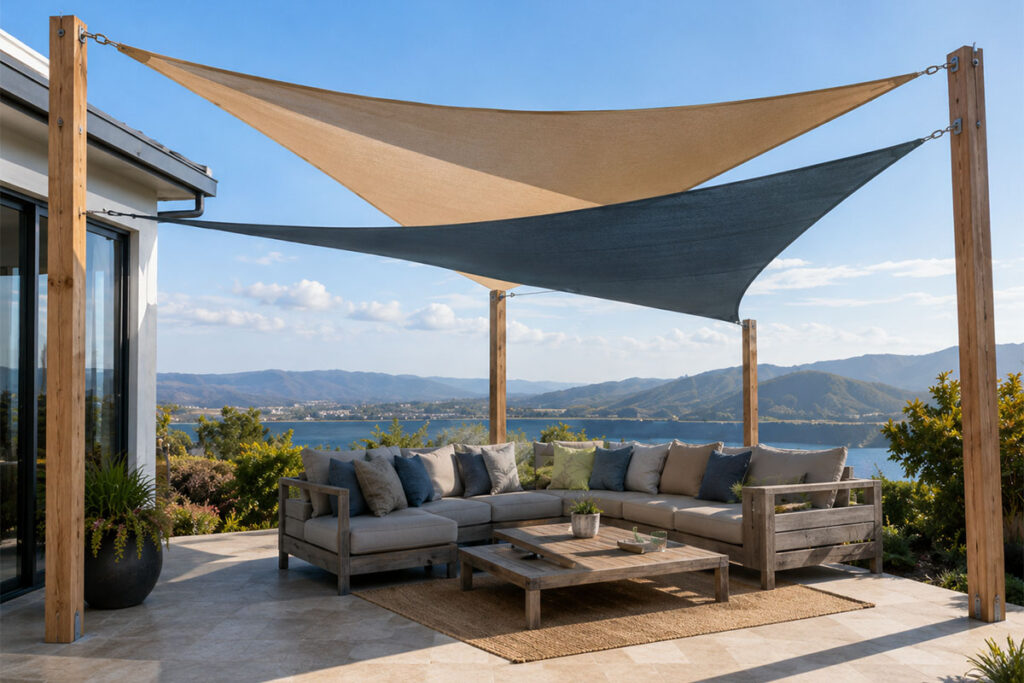
One detail you’ll notice with almost every professionally installed shade sail is that it isn’t perfectly flat. Instead, it’s designed with a noticeable slope. While this may seem like a design choice, it’s actually a critical part of how a shade sail performs and lasts over time.
Let’s take a closer look at why slope matters.
Water Drainage and Weight Management
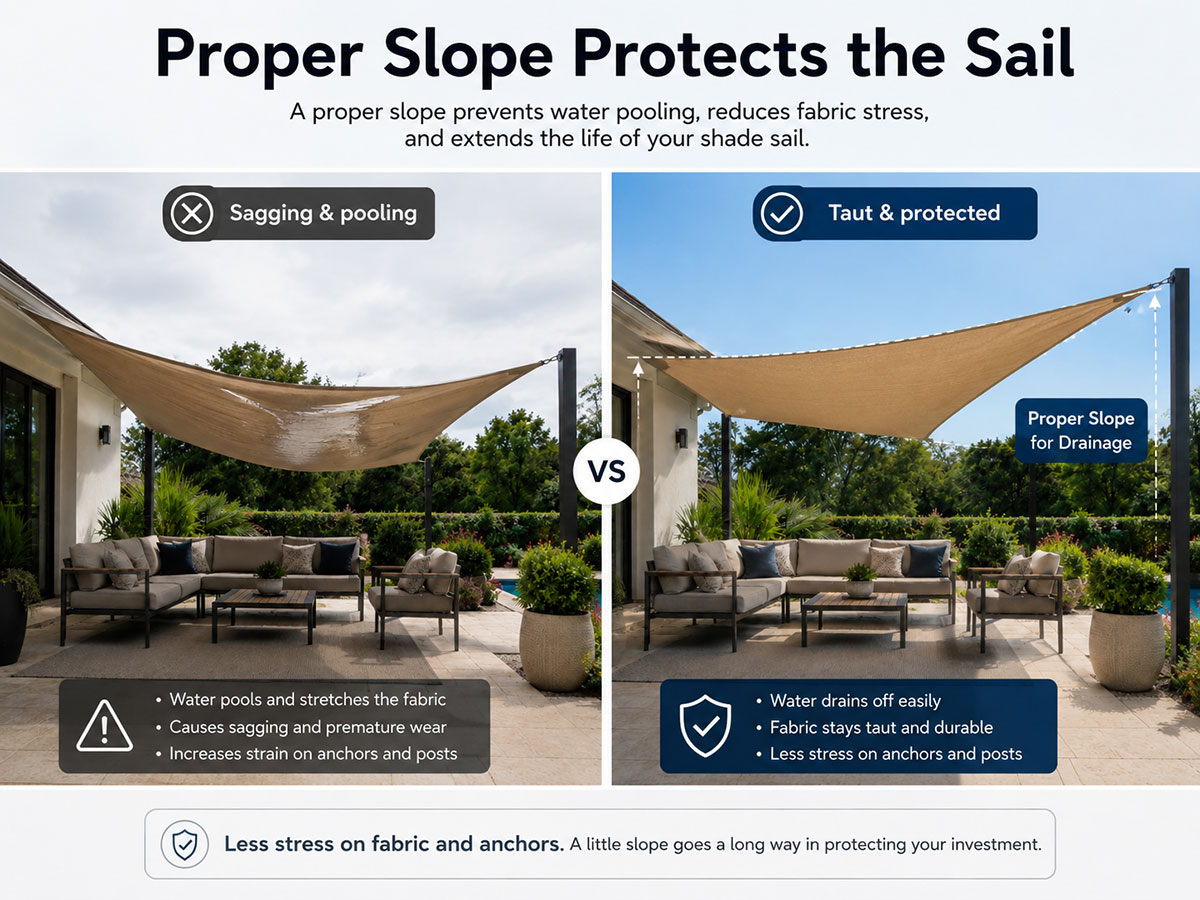
One of the most important reasons shade sails are installed at a slope is to manage water runoff. Even though most quality shade sail fabrics are semi-permeable and let some water filter through, heavy downpours can quickly overwhelm the material.
- Without a proper slope, rainwater will naturally collect in the middle of the fabric, creating heavy pools.
- Standing water adds an immense amount of weight to the structure.
- Controlled drainage keeps your outdoor area usable immediately after a storm instead of leaving a sagging, dripping puddle overhead.
Protecting Fabric Integrity and Reducing Stress
Water is heavy, and letting it pool on a flat or poorly angled shade sail spells disaster for the material. Constant pooling forces the fabric to stretch, sag, and eventually lose its tension entirely.
By incorporating a deliberate slope into the design, gravity does the work of pulling water off the edges rather than letting it sit and strain the fabric. This prevents premature wear and tear, reduces unnecessary stress on the stitching and corners, and significantly extends the lifespan of your shade sail.
Enhanced Durability in Windy Conditions
A More Attractive, Architectural Design
Beyond performance, a sloped shade sail creates a much more visually interesting outdoor space. Rather than appearing flat or lifeless, varying heights create depth, dimension, and a contemporary architectural look that complements both residential and commercial properties. Many installations use multiple sails positioned at different heights to create:
- Layered visual interest
- Greater shade coverage
- A unique, custom-designed appearance
- Improved integration with surrounding landscaping or buildings
The result is a functional shade solution that also enhances the overall aesthetic of your outdoor area.
What Determines the Slope?
Every shade sail installation is different, and several factors influence the final angle of the sail. These include:
- Sail size and shape
- Height of each mounting point
- Placement of support posts
- Existing structures used as anchor points
- Desired drainage direction
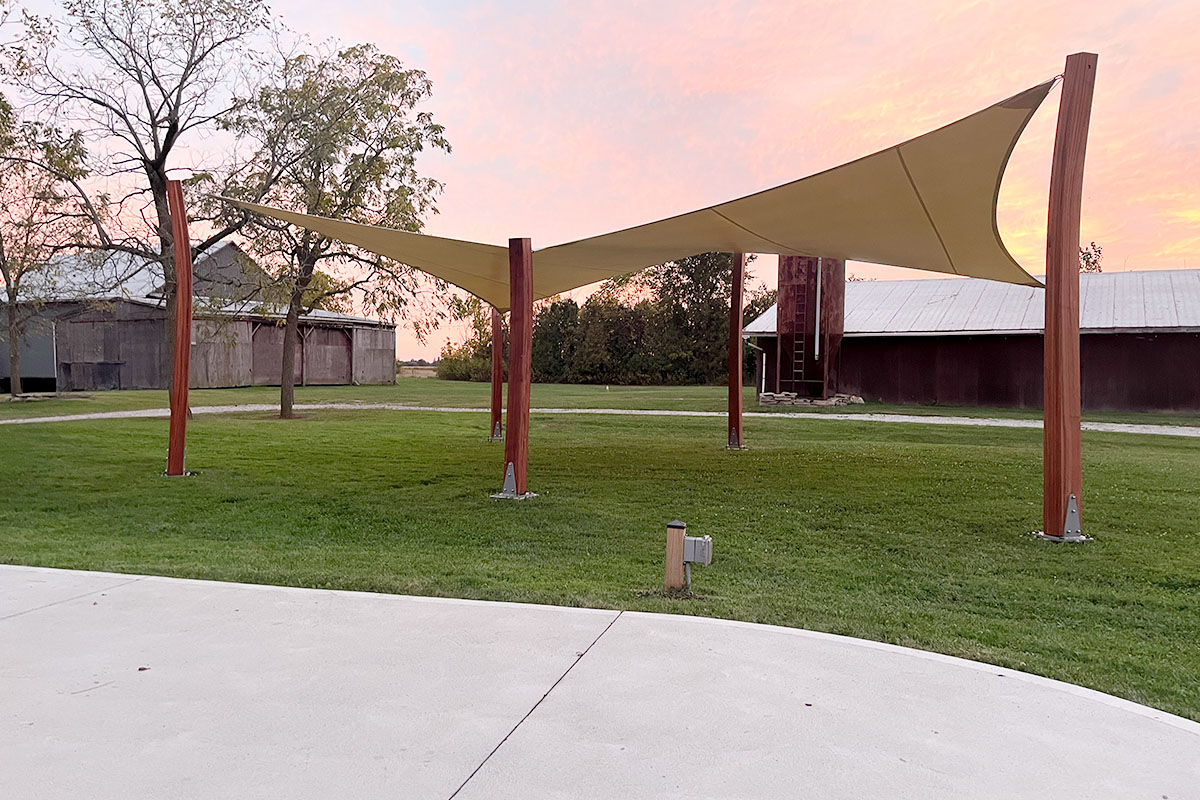
Achieving the right balance between appearance, tension, and drainage requires careful planning before installation begins. The general rule of thumb is to have a 1 – 2 foot difference in height, for every 10 feet of horizontal span (or a 10 – 20% slope). This pitch helps water drain properly while keeping the sail firm, secure, and tensioned.
As we mentioned above, the ideal slope will also depend on the design of your shade sail and the conditions of the site. Larger sails, custom shapes, and locations exposed to stronger winds may call for steeper slopes. The final slope should be planned around the local climate, the layout of the space, and whether the sail is attached to an existing structure or supported by posts.
When to Call a Professional
While small, DIY shade sail kits might seem straightforward, getting the physics and tension right can be surprisingly challenging. For larger, permanent, or commercial shade sail installations, you should hire a professional like Sun Shade Co. Our expert team has the tools and experience to calculate the exact load-bearing requirements, proper slopes, and secure anchor points needed to keep your property safe and stylish.
Your Summer Shade Questions, Answered
Why can't a shade sail be installed flat?
A flat shade sail allows rainwater to pool on the fabric, creating excessive weight that can lead to sagging, stretching, and damage to both the sail and its support structure.
How much slope should a shade sail have?
While it depends on the size of the sail and local weather conditions, a general rule of thumb is to vary your connection points by at least 10% to 20% of the span length. This ensures a steep enough angle for water to run off efficiently without compromising the shaded area below.
Can I install a large commercial shade sail myself?
For large, permanent, or commercial installations, professional installation is strongly recommended. Companies like Sun Shade Co. ensure that the anchor points, post positioning, and structural engineering can withstand heavy winds and rain loads, keeping your investment secure.